A drive that has been overwritten still exists. It can be re-used, re-sold, mislaid, or opened again by anyone who later disagrees with your assessment of the software that wiped it.
Shredding removes that argument. The platter is reduced to fragments too small to mount, in front of you, in a single pass. There is no queue, no off-site holding, no chain of custody to audit because the chain ends where it starts.
We work in London and the South East, on your loading bay or in your car park, from one drive to four thousand.
Solid state is the harder problem, and the reason the shredder throat is set the way it is.
An SSD spreads data across NAND packages and keeps spare blocks the controller will not expose. Overwriting reaches what the controller admits to; a 20 mm shred can leave a package whole. Both leave recoverable silicon on the floor.
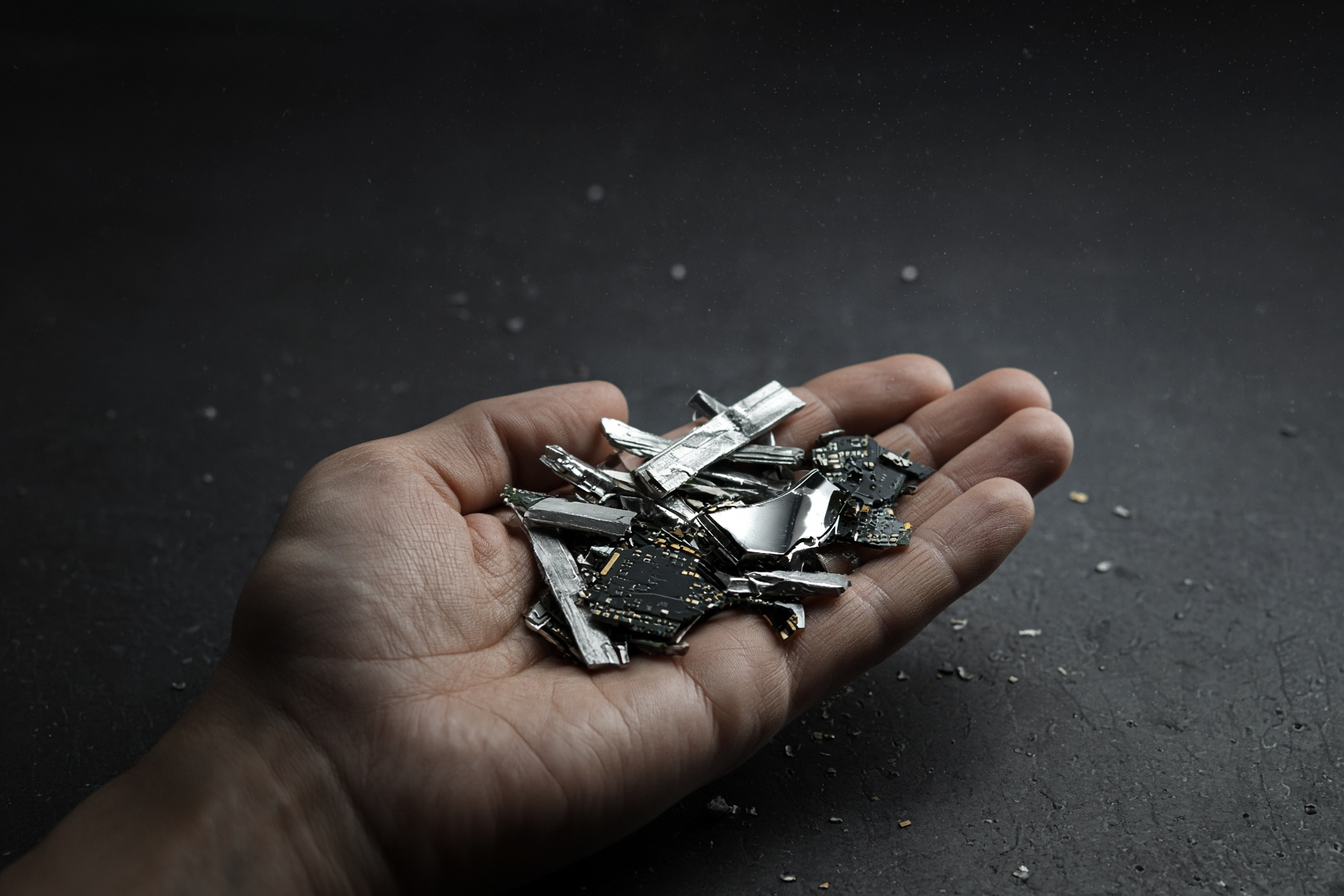
At 12 mm the packages themselves are cut, which is why NIST SP 800-88r2 treats disintegration as the only destruction method it will call complete for flash media. We run one particle size for every medium so there is nothing to specify and nothing to get wrong.
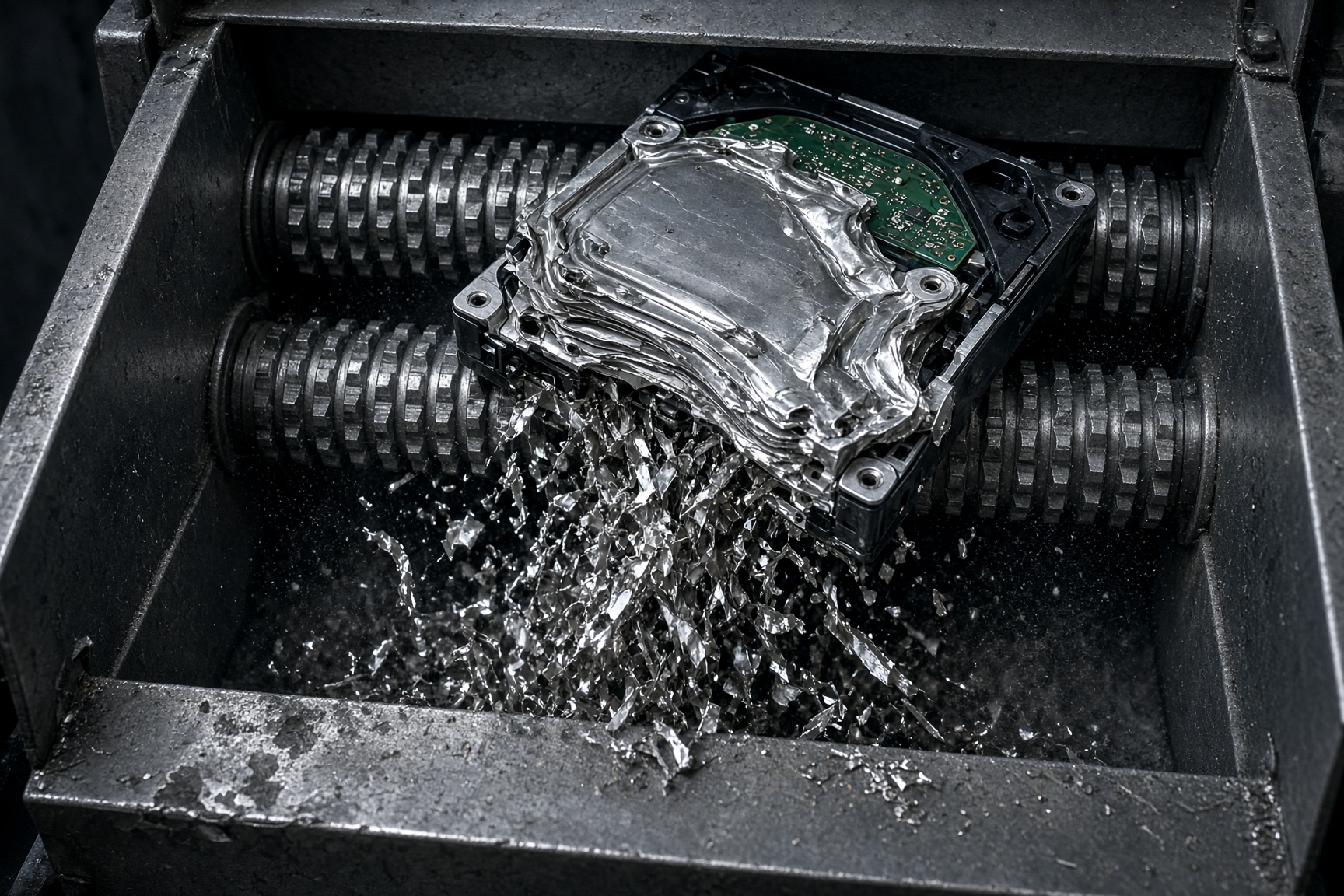
We arrive
A single vehicle, two operators, the shredder on board. Nothing leaves the site intact, so there is no collection to track.
Serials read
Every unit is scanned at the throat and logged against your asset list before it is fed. Discrepancies are raised there, not later.
Shredded to 12 mm
One pass, one particle size, whatever the medium. You stand at the throat for all of it if you want to.
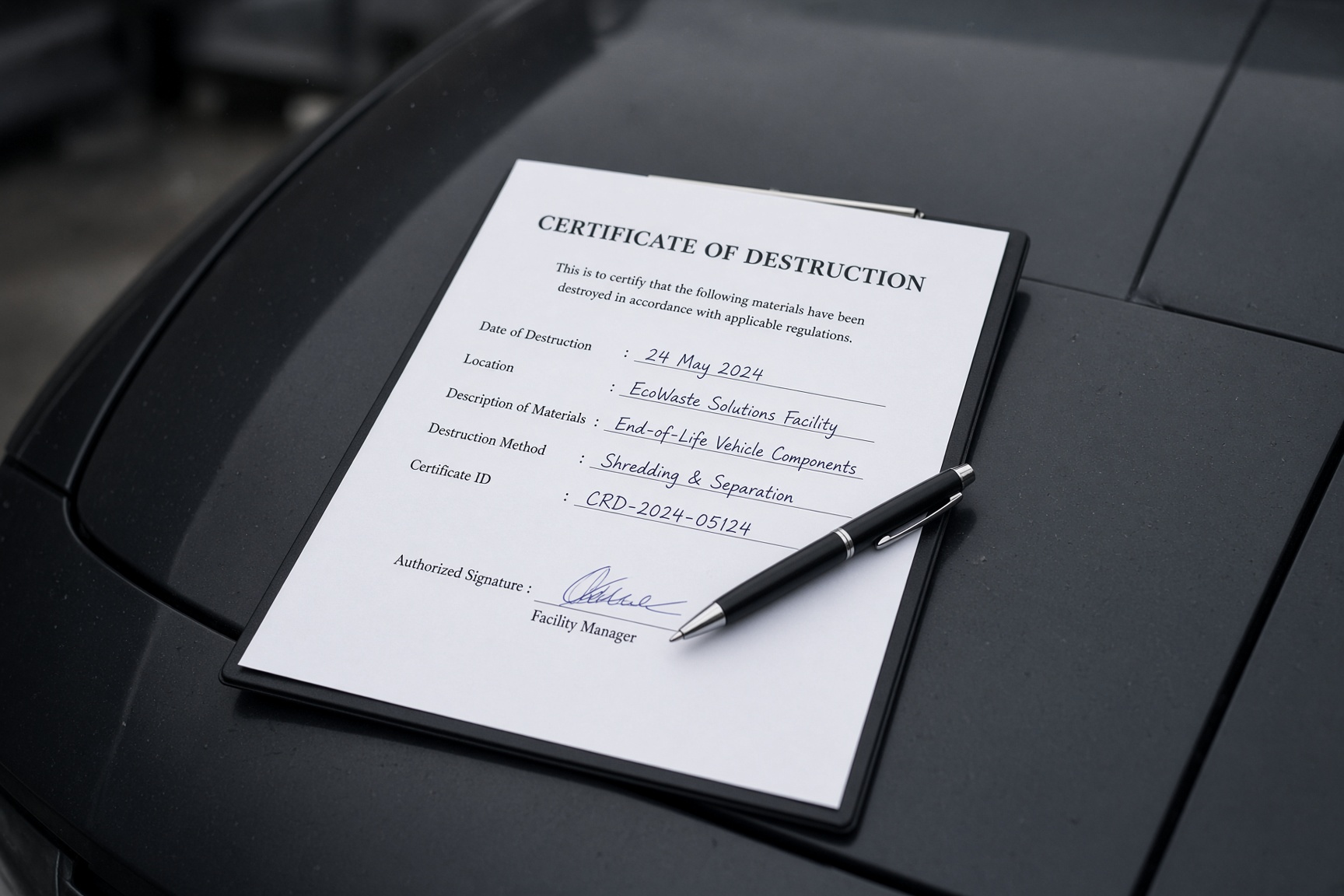
Certificate signed
Serial-level record, signed on the bonnet before we leave, in your inbox the same day. Fragments stay with you or go for smelting.
See a certificateTell us how many drives and we will give you a date.
Most jobs are booked within five working days. Same-week slots exist for decommissions and office moves.
We will come back with a date within one working day.
You will get a written slot, a fixed price and the operator's name before anyone arrives.
Send anotherOr email jobs@proutiles.com